What does it mean to be on an Expedition Cruise?
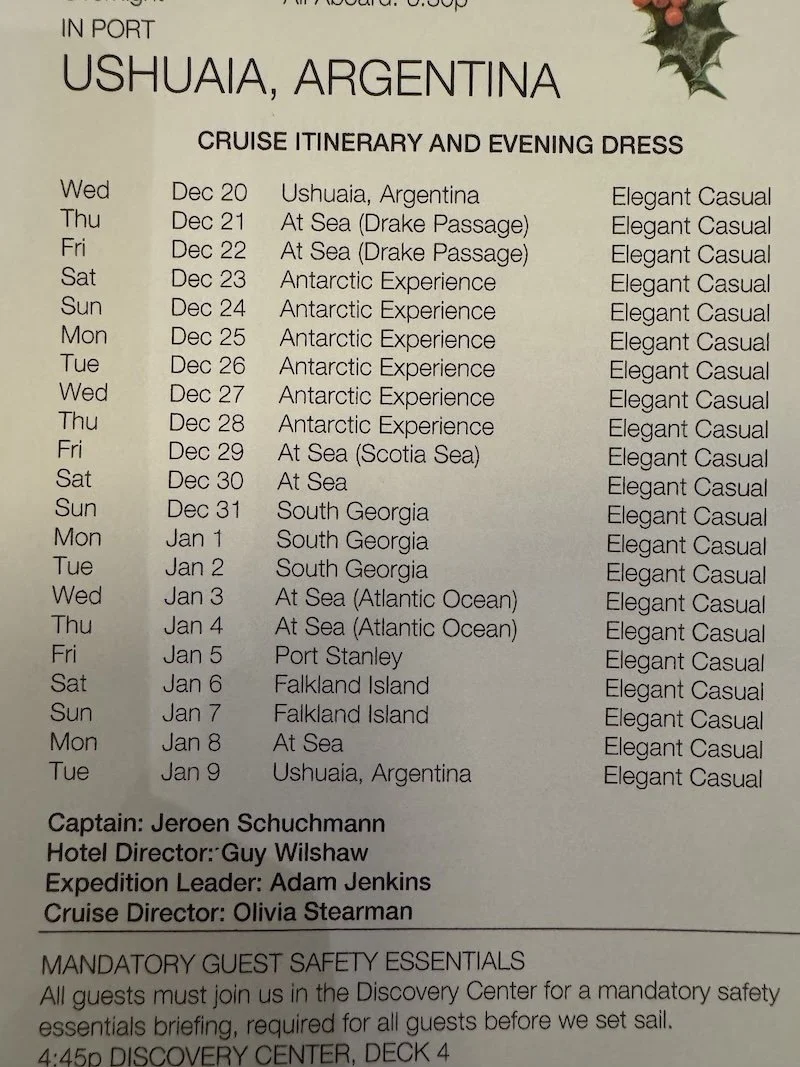
Our Itinerary
Most cruises hand you an itinerary months in advance, listing which port you'll be at, what time you'll be there, and which excursions you can book ahead of time. An expedition cruise isn’t anything like that. It can’t work like that.
The goal on an expedition cruise is simple. They get you to the place and keep you there as long as possible, hoping to show you as much of it as they can. What they can't do is promise you the exact spots or the exact timing. Weather is unpredictable. Wildlife is even more unpredictable, and this is their land and their water, not ours. Their use of it comes first, always.
Every single plan is "wait and see," with the ship doing its best to give us a heads up the night before. That plan could get thrown out entirely in an instant, if there was a chance to see something better, go somewhere cooler, or if the weather turned and an afternoon we were all supposed to be off the ship became a day back on board instead. Bonus trivia round for everyone, if that happened.
The nightly briefing
Every evening, usually around 6pm, the whole ship gathered for a briefing led by our expedition leader, Adam. He'd recap the day, share the best stories and photos that he’d seen, then pull up his presentation and walk through what he expected for tomorrow.
Every day had two planned outings. I'd read in advance that it was always one landing and one scenic cruise, which turned out to be incorrect. Adam’s goal was two landings a day, with a scenic cruise as the fallback whenever they couldn't safely put us on land for whatever reason - whether that was too much wildlife in the way, bad weather, or the growing problem of avian flu. Most of the time, he achieved that goal.
A landing means a Zodiac ride that gets you onto actual ground to walk around. A scenic cruise is what it sounds like. We ride around on the Zodiac for an hour or two with the expedition team pointing out wildlife and scenery from the boat.
Getting Onto Zodiacs
The whole ship was split into four color-coded groups, and when your group got called determined when you got off the ship. That staggering kept things moving. While one group was out on Zodiacs, another was coming back through the mudroom, another would be on land, with the other gearing up to go. The goal was for everyone to get roughly the same amount of time at each stop, with nobody standing around waiting longer than they had to.
At the end of each briefing, Adam would announce which color was going first the next morning. Antarctic summer means no real sunset, and the expedition team used every bit of that extra light. With no sunrise to wait on, we could be off the ship before 7am and the sky would already be as bright as it was going to get all day.
Getting called first, usually around 6:30, was always met with a groan. Getting a later slot would get an actual cheer. Adam rotated the order so the same group wasn't stuck with the early wakeup two days running, though that never once stopped anyone from complaining.
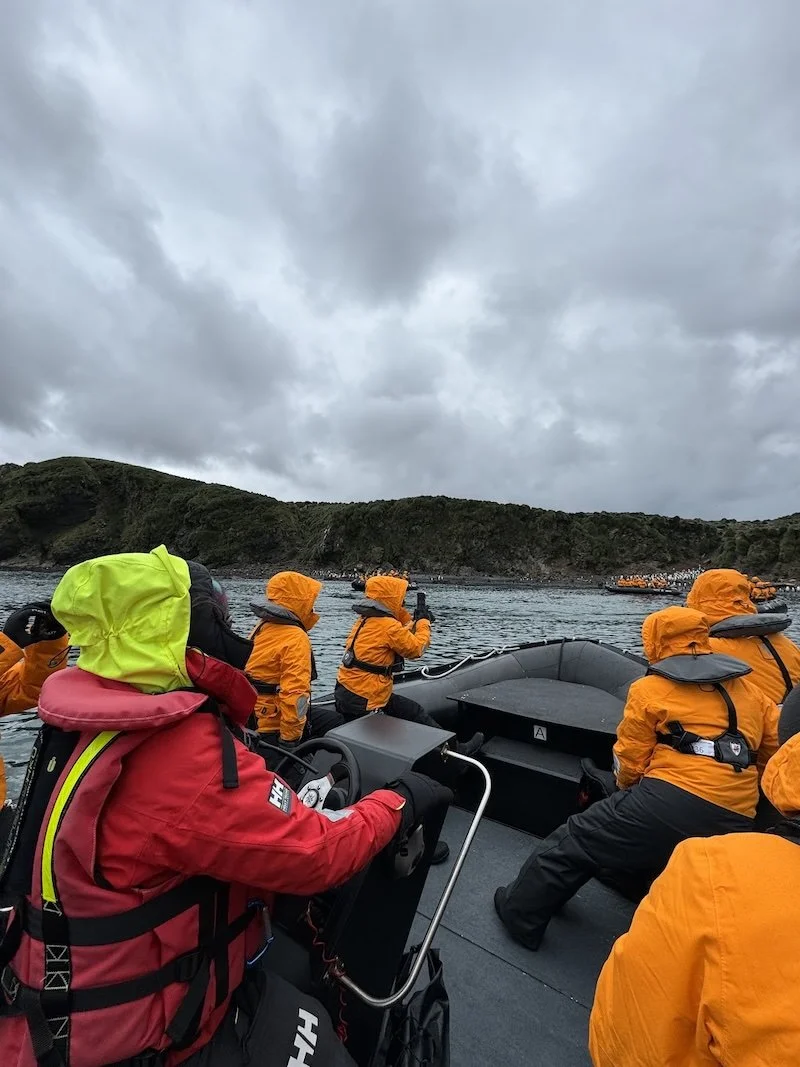
Life in Expedition Mode
Every morning, we’d wake up to Adam over the loudspeaker with a cheerful “Good morning Seabourn Sailors!” He’d be announcing we had arrived at our destination, zodiacs were dropped in the water, the expedition team was clearing a path preparing for us to head out, and he would be calling the first color in 30 minutes. “This is expedition mode,” he’d remind us. It felt like being back at sleepaway camp, except the camp counselor was announcing our arrival in Antarctica instead of breakfast.
"This is expedition mode" got repeated constantly, and it's the single most important thing to understand before you book, not just before you go. The itinerary you're handed is a plan, not a promise. You'll be somewhere in the general vicinity of what's listed, but everything past that is up to the expedition leader. They decide what's actually possible to see and what's actually safe.
Flexibility is the whole game. One of the earliest briefings made it clear we weren't guaranteed a landing, a cruise, or even a single minute off the ship, full stop. The team's entire focus was getting us the best experience they safely could, and that's also why boarding was run so efficiently. Conditions that were fine right now might not hold five minutes later. I remember one day where not every color group got off the boat at all, because the weather turned that fast.
That same unpredictability meant getting off the ship meant being ready to stay off the ship. The expedition team running each landing always carried a full kit, just in case a group couldn't get back before conditions worsened and had to hold on land for as long as an entire day or two.
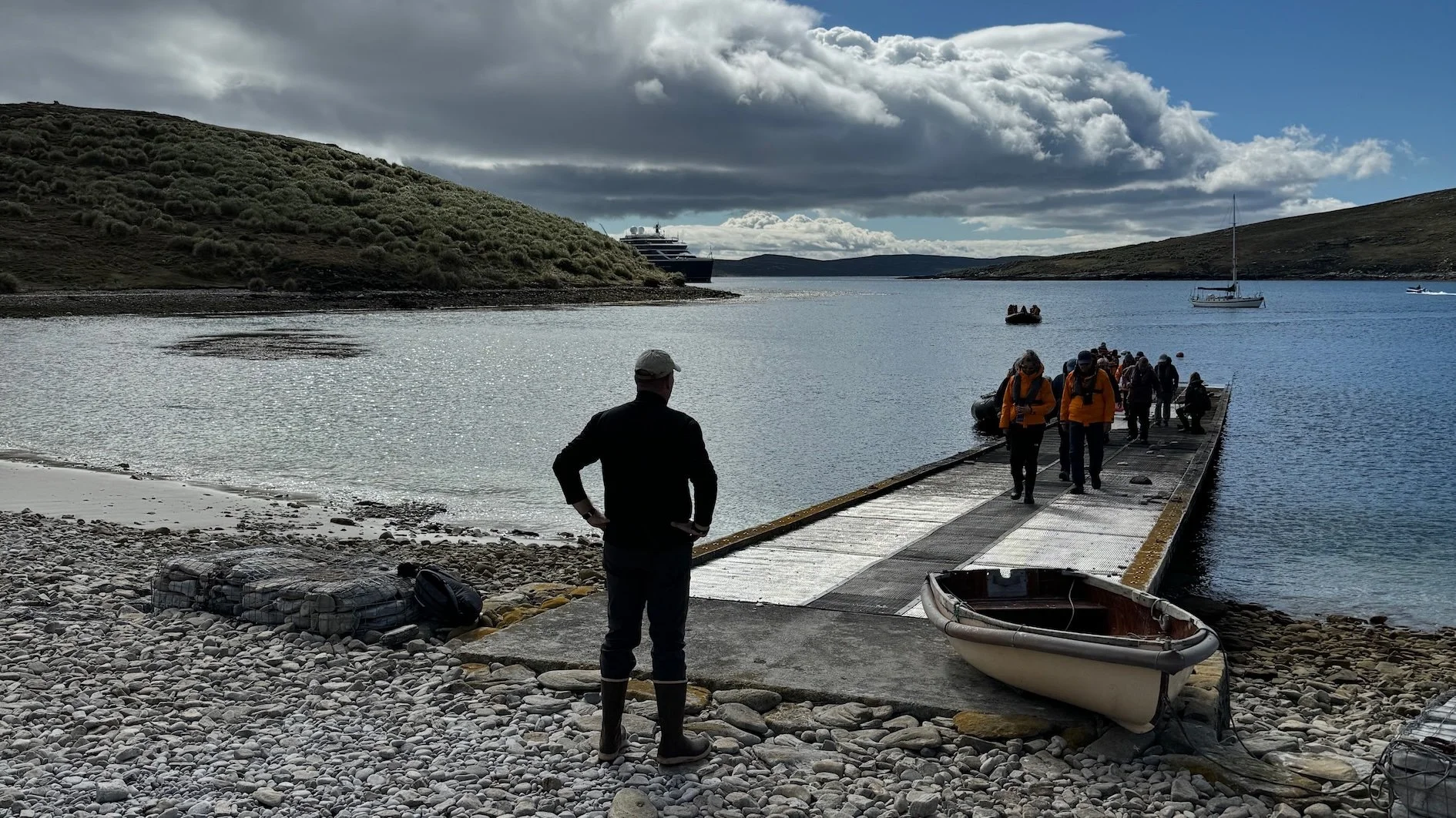
Expedition Leader Adam Jenkins waiting for us to join him on land
Staying on the Path
Watch people walk on land in Antarctica and you'll probably miss the thing that actually matters: the carefully marked path the expedition team scouted before anyone set foot on shore.
We were never allowed to step outside that path, no exceptions. The presentations were extremely specific, as you can see in the image below, so there could be no question. We knew full well where we should and should not be walking.
That's partly for the wildlife and the environment, and partly for us. Keep your distance from animals, don't disturb ground that hadn't already been disturbed, follow the expedition team without arguing about it. Break any of that and you'd lose your own ability to go ashore for the rest of the trip, and in a bad enough case, the whole ship could be turned around and sent home early.
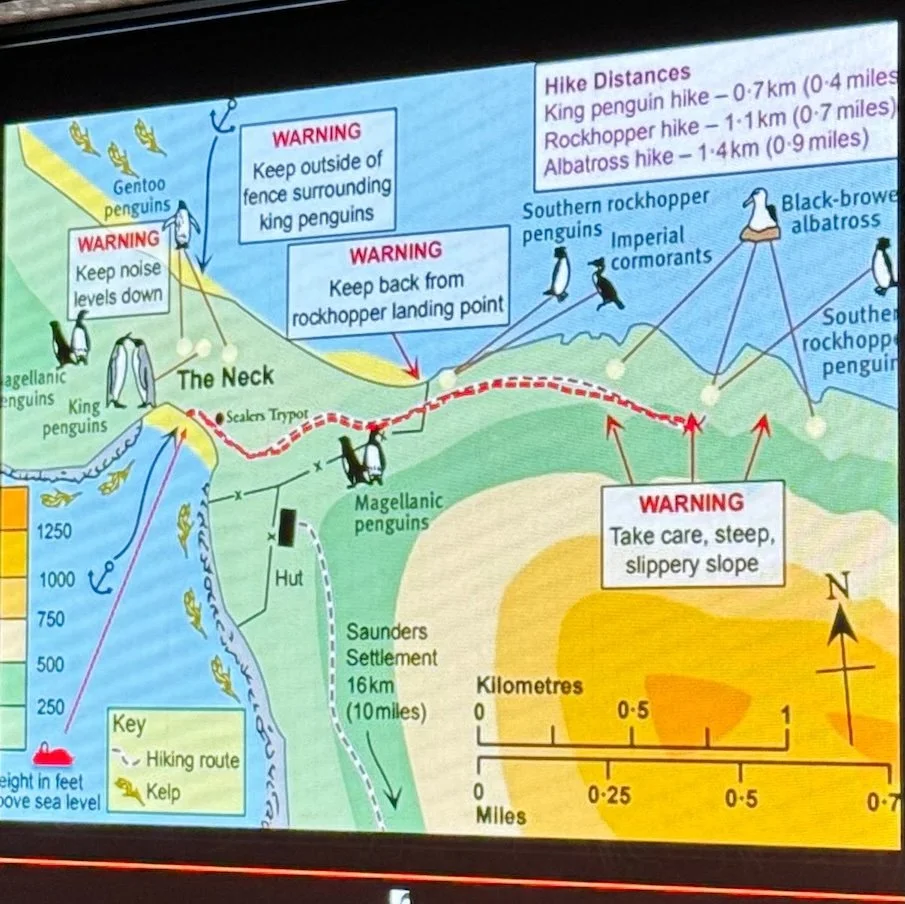
One of Adam’s presentations telling us what to expect the following day
Exhausting and Exhilarating
After the morning landing, the ship would sail toward the afternoon's destination while everyone napped or grabbed lunch. I never napped, for what it's worth, so I was tired for most of this trip. Then the Zodiacs dropped again, each color group got its second turn, and the evening briefing got pushed just late enough for the last group to make it back, change, and show up. We'd trade photos and stories while we waited for Adam to take the podium and lay out the next day.
Then dinner, bed, and another "Good morning, Seabourn sailors" to start it all over again.
