Grytviken: An Abandoned Whaling Station and Shackleton's Grave
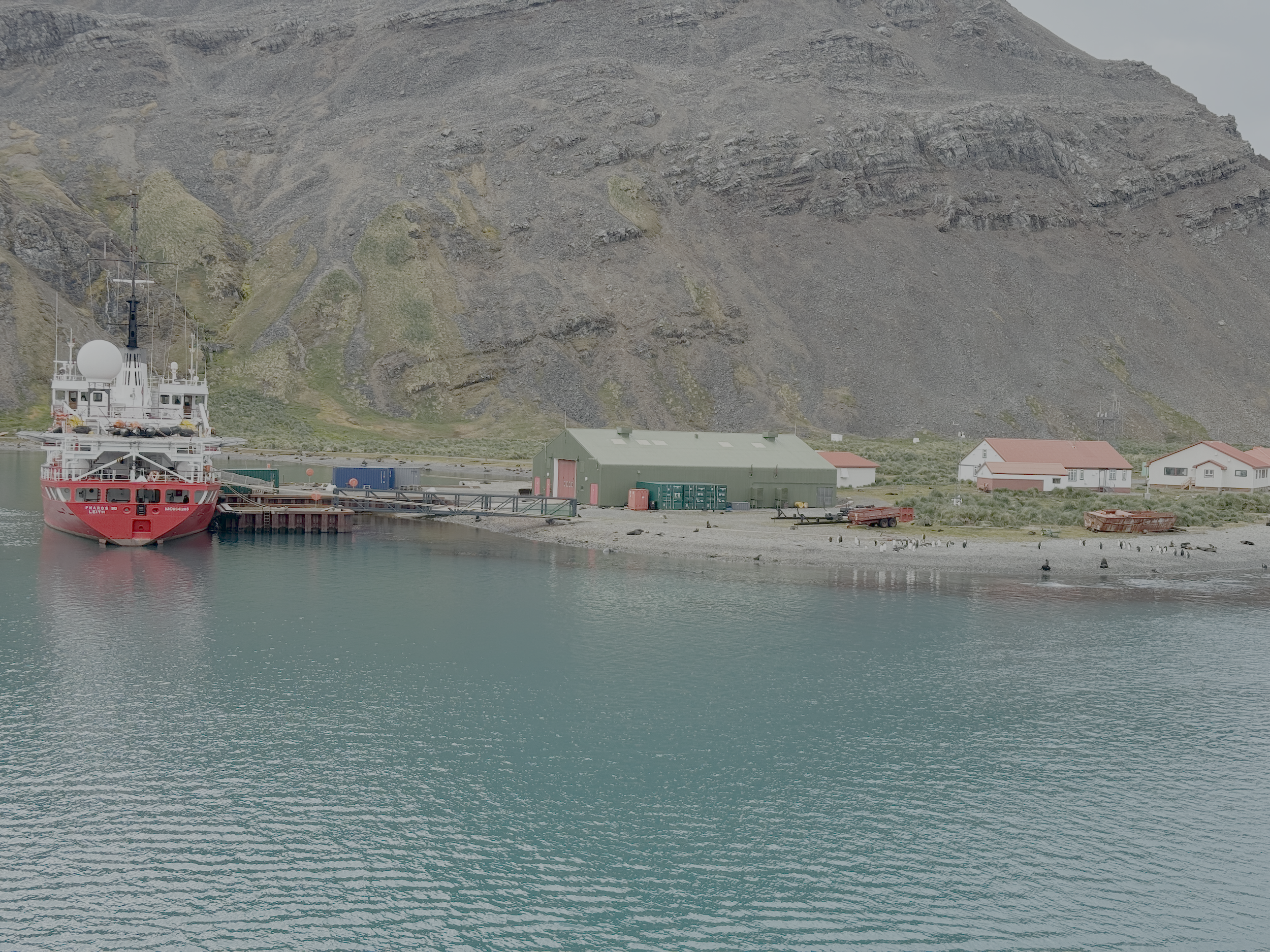
Grytviken as seen from Seabourn Venture. The red ship is a visiting research vessel.
Grytviken was our first stop on South Georgia. All the biosecurity checks, blackout mode, a dog sniffing our boots for stowaways, all of it led here. Nearly the entire ship had read Endurance as part of their preparations for the trip, and between that and the many lectures and conversations we had on our way, by the time we finally landed at Grytviken, Shackleton and his entire crew were people we knew fairly intimately.
A Norwegian captain named Carl Anton Larsen founded Grytviken in 1904, and for decades it was one of the busiest whaling stations on earth, processing blubber, meat, and bone into oil right there on the beach. Then the whale population collapsed, hunted down to numbers so low the whole operation stopped making sense, and the station shut down for good in 1966.
We could see the station from Venture as we came in, the old ship, the rusted-out buildings and enormous oil tanks, and wildlife covering nearly every bit of land in between. The station is now home to the South Georgia Museum, a post office and a small gift shop, along with a whole lot of fur seals and elephant seals, plus a smaller group of king penguins who call it home.
This was where we first started to spot the seal pups. We'd been warned that the pups might think we were playmates and chase us (whereas the penguins pretty much left us alone). That didn't happen here, but it would before we left South Georgia.
Two seal pups play on South Georgia Island.
You can mail postcards home from South Georgia, and we absolutely took advantage. The only other place in the region where you can usually mail postcards is Port Lockroy in Antarctica. Unfortunately, our sailing visited Port Lockroy on Christmas in crummy weather, so we couldn't land and no one from the station could come aboard either. It was a rare, well-deserved day off for the small staff that works there.
The museum had all sorts of exhibits on whaling, the island's history, and the local wildlife. One of the neatest parts to me was the preserved penguin pelt on display. The feathers are exactly as soft as they look, yet oily feeling, which is what keeps them warm and waterproof enough to swim in freezing water.
There was also a bronze penguin, created by one of our expedition team members, Anthony Smith, during the year he spent as the artist in residence on South Georgia (link to Anthony's website with more information). He spent a year of his life on an island with maybe three or four other full-time residents just to make something beautiful, which is just extraordinary. All of the expedition staff were fascinating people with incredible backgrounds, and honestly, so were the passengers. There's something about someone who chooses to go that far, for that long, that I think makes them really special.
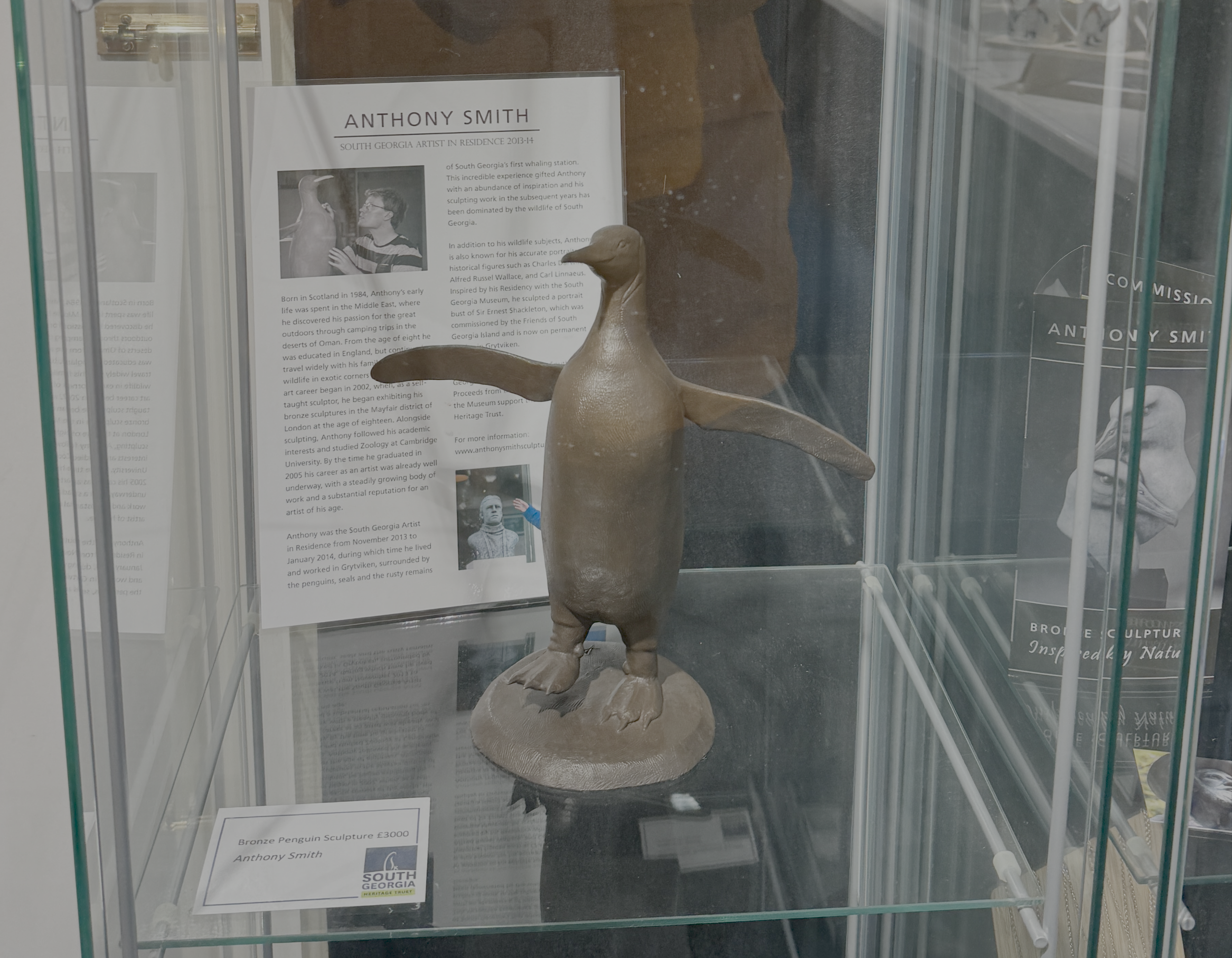
Exhibit at the South Georgia Museum highlighting Anthony Smith’s work
After far too short a time walking around the museum and watching the penguins and seal pups play, we got back into the zodiacs to motor a short distance away to Ernest Shackleton's grave.
He died in 1922, at the start of what would become his final expedition, and his wife made the call to leave him in South Georgia rather than bring him home. The grave was surrounded by seals and penguins going about their business, completely indifferent to who was buried there, and standing in the middle of it, knowing Shackleton's history and what it took to get him there, it felt exactly right. It's clear why she chose it.
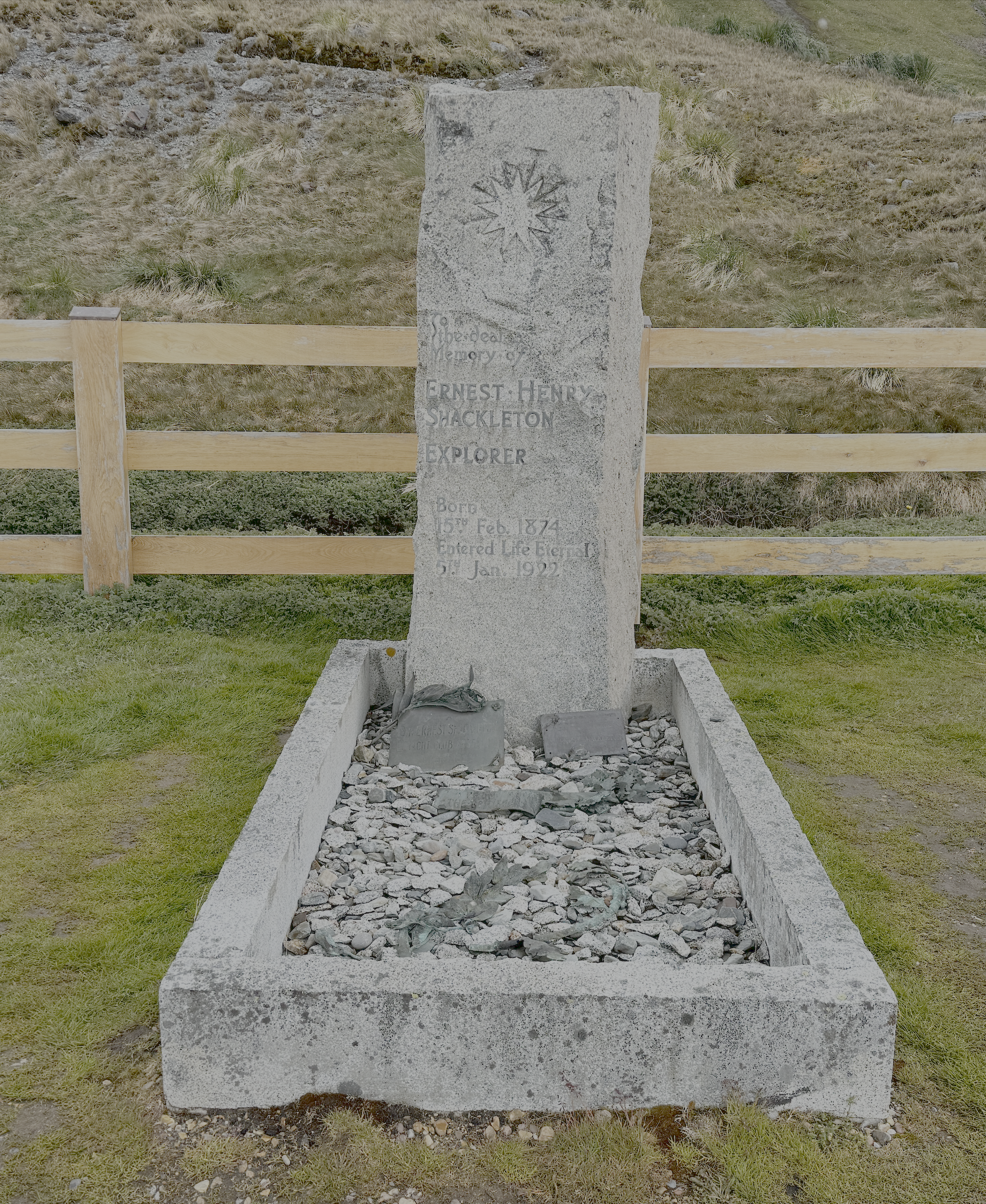
Frank Wild is buried right beside him, though he wasn't laid to rest there until 2011, decades after his own death, once his ashes were finally tracked down and brought south to join his old commander. Between the two of them, Wild might have actually made the bigger impression on me. Reading Endurance before this trip, his ability to manage people through that entire ordeal, the determination and interpersonal skill it took, stood out even next to Shackleton's own leadership. Shackleton at least had the hope of moving forward. Frank Wild kept the men who were left behind alive.
Grytviken set the tone for everything South Georgia turned out to be, but it also crystallized something about the expedition team itself. Every one of them had a story like Anthony's, some specific, remarkable path that led them to a life spent on ships and islands at the bottom of the world. Getting to know who they actually were, one landing at a time, ended up being as much a part of this trip as any glacier or penguin colony.
