Two Sea Days to South Georgia
Two sea days stood between us and South Georgia, and by the second one, our suite looked like a small gear-sorting operation. Every layer we planned to wear off the ship, base layers, leggings, long underwear, all of it, was laid out across the bed, ready to be carried down and handed over to the expedition team for a proper vacuuming.
I already told you sea days sound relaxing and aren't, back when I wrote about crossing the Drake Passage. That held true here too, for a completely different reason, and getting up early one day to see A23a was only part of it.
Antarctica had already asked a lot of us. Everything we’d worn off the ship had been inspected, and everything was washed once we got back on the ship. My hiking poles and our boots were scrubbed and rinsed in a special liquid that would make sure we were tracking anything from one place to another.
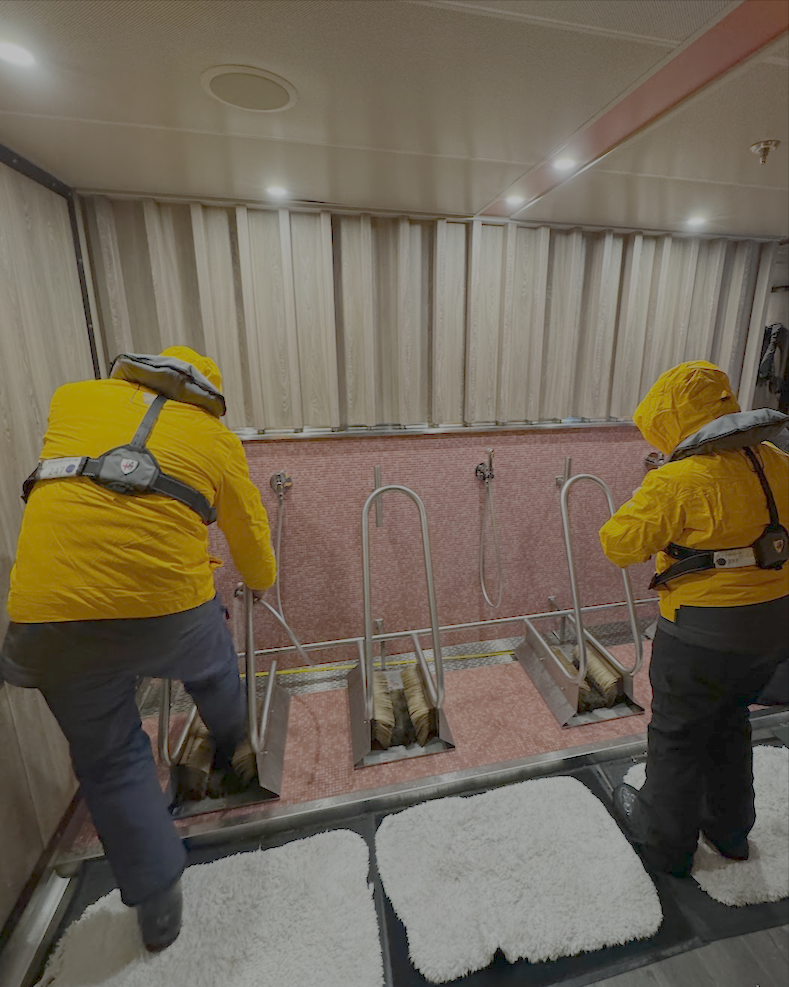
Washing off boots after landing
South Georgia required even more dilligence.
It's a protected island that's spent decades clawing back wildlife the whaling industry nearly wiped out, and whales aren't even the whole story. Ships historically brought rats too, and those rats spent generations devastating the native ground-nesting bird population. Rats love bird eggs, apparently. South Georgia has worked hard to reverse the damage done, and it was declared free of rats in 2018.
Birds like the South Georgia Pipit and whales had started to come back to the island. We weren’t about to be the ones who ruined that.
We gained two additional passengers for a few days to oversee the preparations. Since this was Seabourn’s first visit to South Georgia for the season, a representative from South Georgia boarded to observe and ensure that everything was prepared properly. She also did a presentation for all of us about the history of South Georgia, and how she personally ended up there. South Georgia is a UK territory, and residents can apply to work on the island. If selected, they’ll be there for months at a time, assisting researchers, and working in the small shop and museum we were to visit at our first stop. She emphasized how much she was enjoying the fresh food on board, since produce was obviously impossible to come by on South Georgia.
But before we could set foot on South Georgia, there was a lot to be done.
First - every item of clothing we planned to wear off the ship had to be brought down to the expedition team and vacuumed. We dropped piles of clothing on the tables in front of an expedition team member, and they ran the tube of the vacuum over every item, every inch. We had to ensure that there weren’t any loose fibers, buttons, leaves or seeds hiding anywhere.
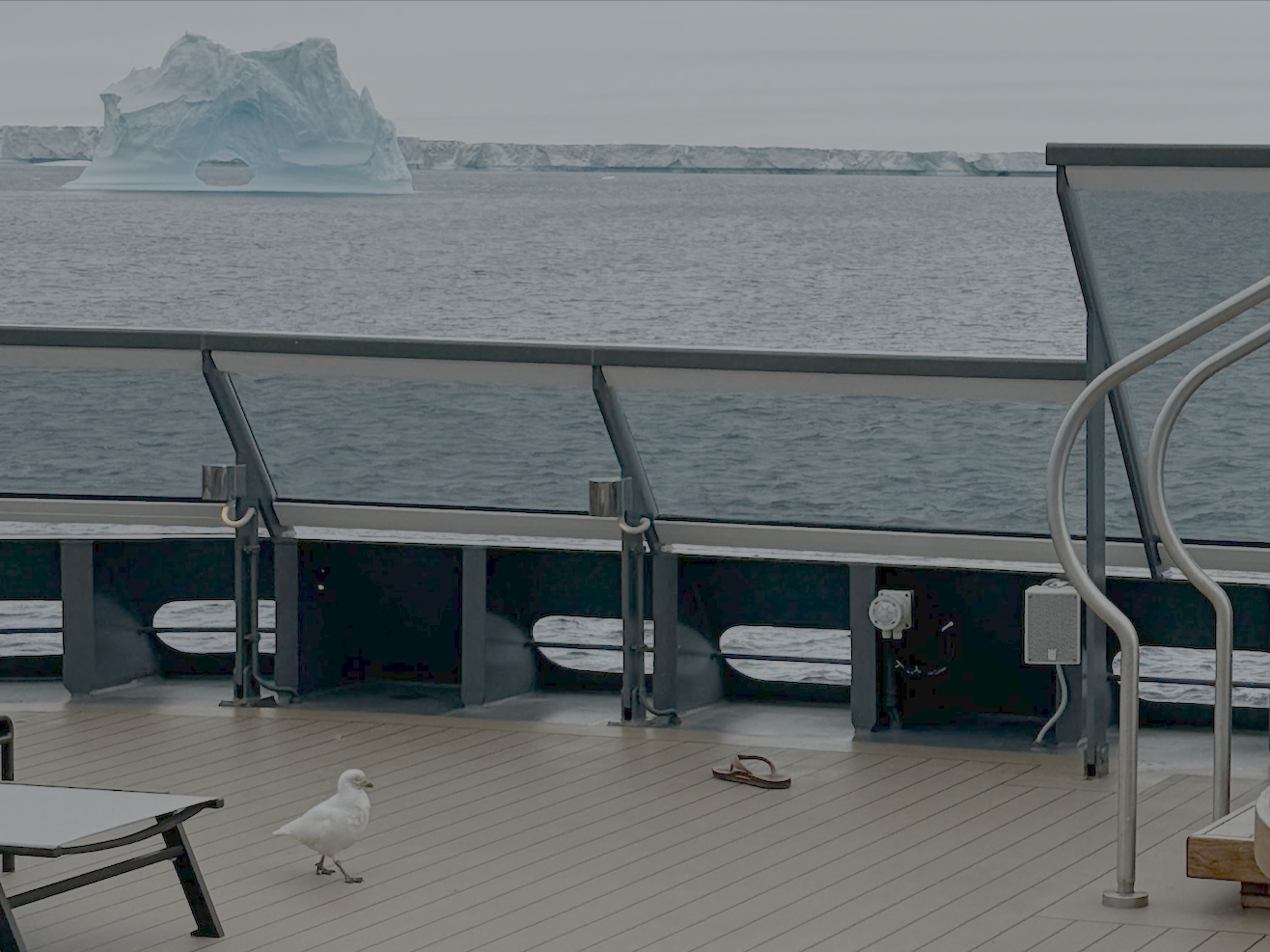
A snowy sheathbill walks along the deck on Seabourn Venture en route to South Georgia
Then - the ship had to run dark. Every exterior light switched off, and blackout curtains went up over every window to ensure no light leaked out. This was to make sure no birds would fly into the ship at night. We would stay dark the entire time we were in and around South Georgia.
Lastly - I mentioned two passengers came on board. The second was a dog, who thoroughly checked the ship for any potential stowaways. No rats, no bugs, nobody was hitching a ride to South Georgia on Venture.
The bird I caught checking out the sandal on deck was long gone by the time the dog did its search.
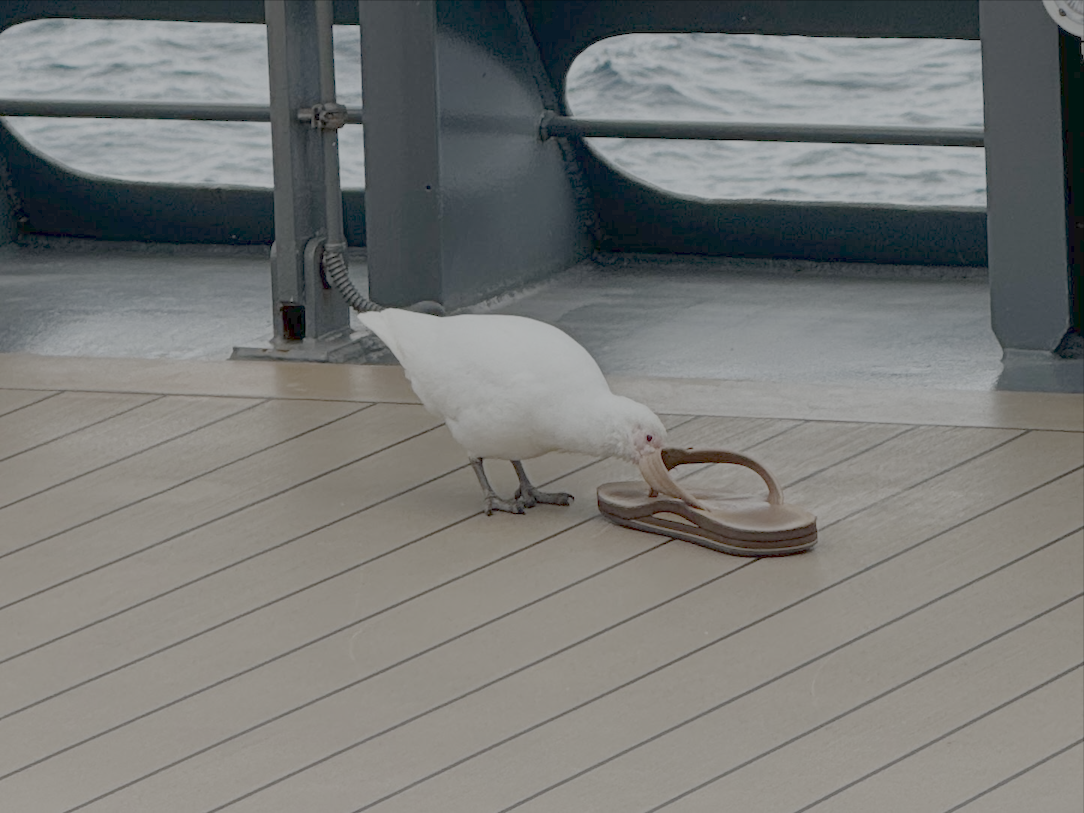
The snowy sheathbill pecking at a passenger’s sandal
Other than preparing for South Georgia, and the early morning to see the world’s largest Iceberg, the days were packed with lectures from the expedition team, our regular trivia, and my husband and I celebrated our anniversary with a special dinner thanks to Seabourn.
The days flew by, and before I knew it, we were waking up to another chipper “Good Morning Seabourn Sailors,” and we were heading down to the mud room to get on the zodiacs for our first landing on South Georgia.
