Seven Penguin Species in One Trip
Before this trip, Seabourn's own Antarctica specialist told us something that has stuck with me ever since: if penguins are the actual goal, Antarctica by itself isn't enough, and South Georgia is where the real diversity lives. I believed him at the time. I had no idea just how right he'd turn out to be.
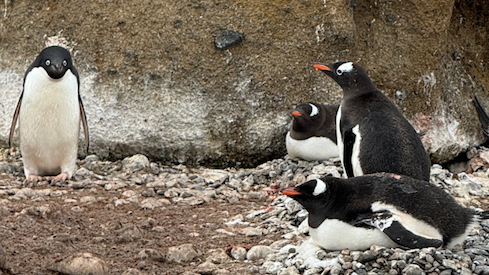
A single adelie penguin looks confused in front of three gentoo penguins in Antarctica
By the end of the trip we'd seen seven penguin species, which still sounds unreal to type out. Antarctica itself gave us Gentoo, Adélie, and Chinstrap penguins, extraordinary on their own. King penguins didn't show up until South Georgia, Macaroni penguins turned out to be a South Georgia bird too (a single scenic cruise, one sighting, never repeated), and Magellanic and Rockhopper penguins waited for the Falklands. If we'd stopped at Antarctica, we would have gone home having seen three species instead of seven, with no idea what we'd missed.
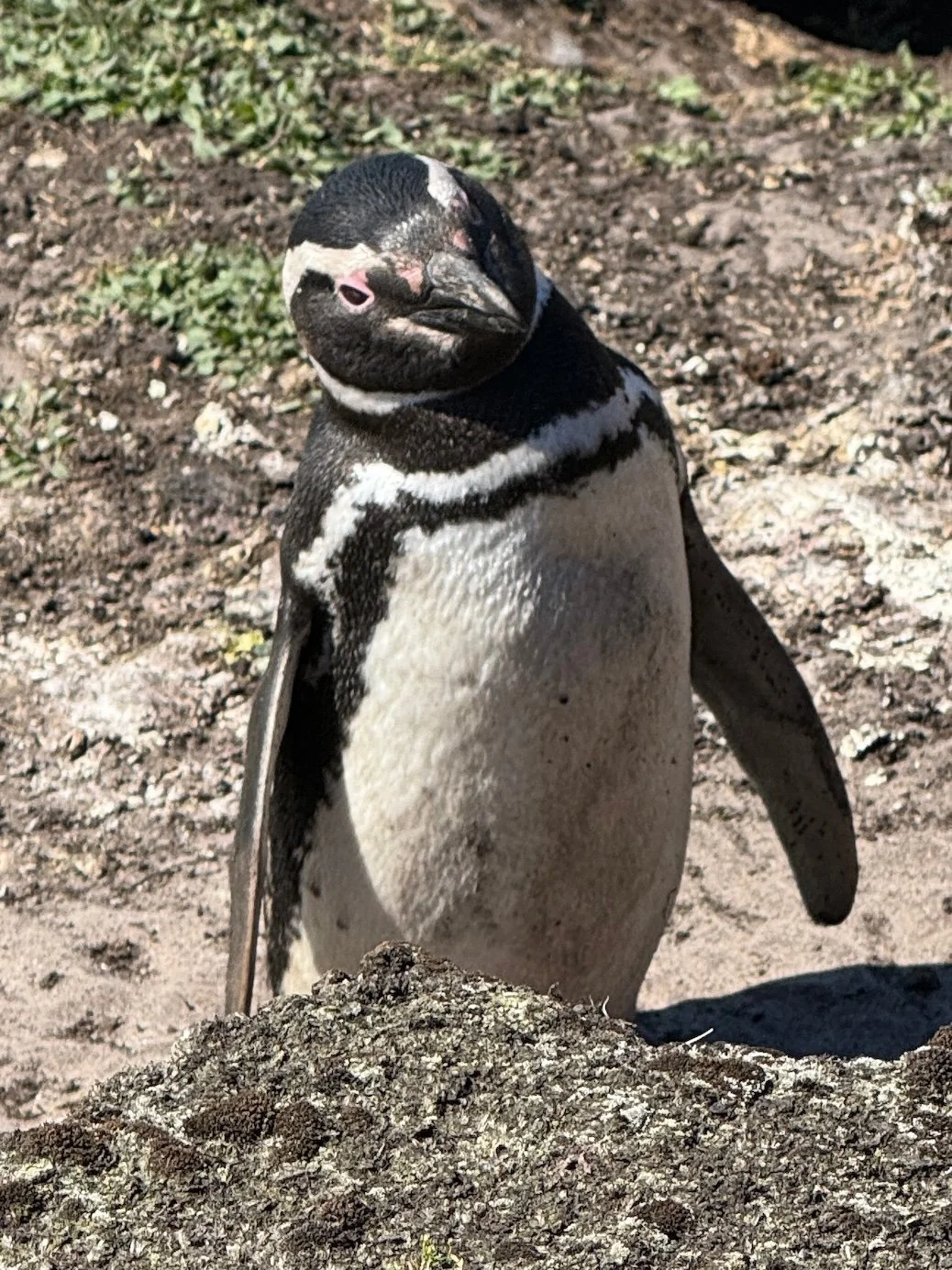
A Magellanic Penguin in the Falklands
The only species on my wish list I never saw was the Emperor penguin, and that one comes down to timing and location more than anything else. Seeing Emperors generally means a specialized trip deeper into the Weddell Sea or the Ross Sea, often earlier in the season than we sailed when it’s colder, and a whole lotta luck. We chose our dates specifically to catch chicks, not Emperors and that trade-off was completely worth it.
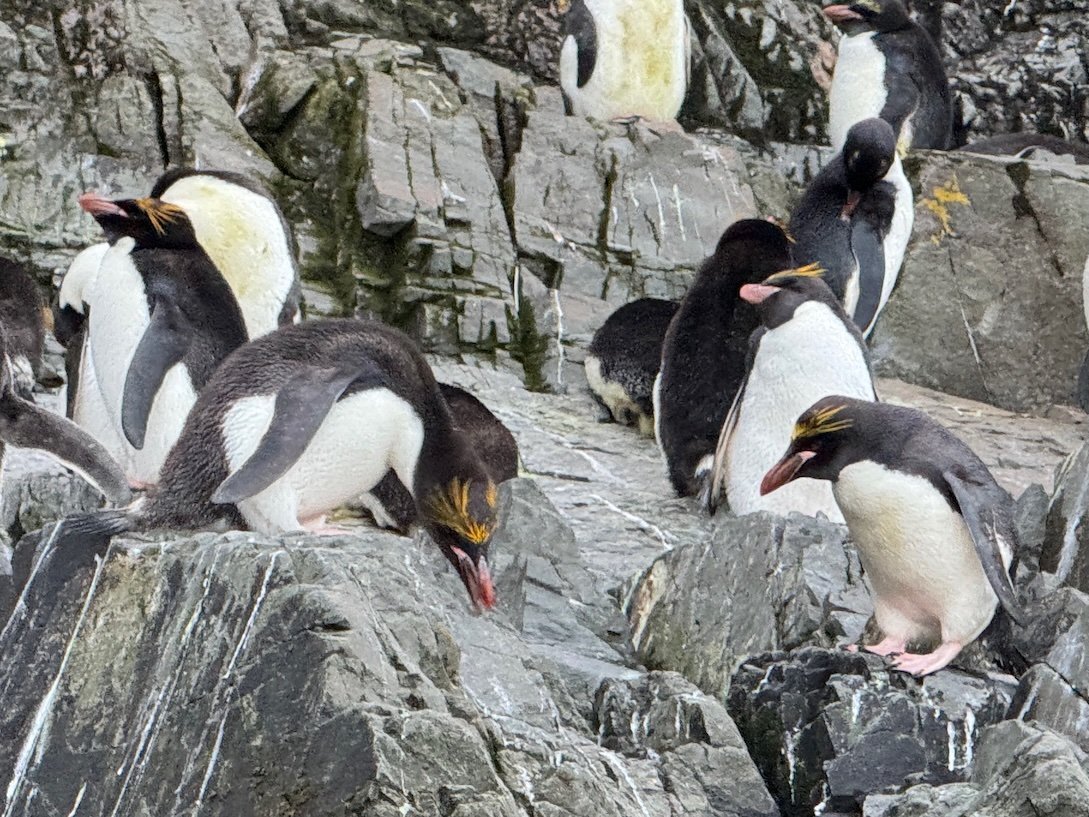
Macaroni penguins in Antarctica
Speaking of chicks, one of the best parts of this trip was seeing penguins at every stage of their young lives as we moved through the itinerary. In Antarctica we were seeing eggs, and in a few cases chicks just barely poking their way out of the shell. By the time we reached the rockhoppers in the Falklands, the chicks were toddling around outside the nest on their own, still fluffy, still clumsy, but clearly not babies anymore. Different species breed on different schedules, so moving from one place to the next felt like watching an entire penguin childhood play out over three weeks, which wasn't something I expected going in.
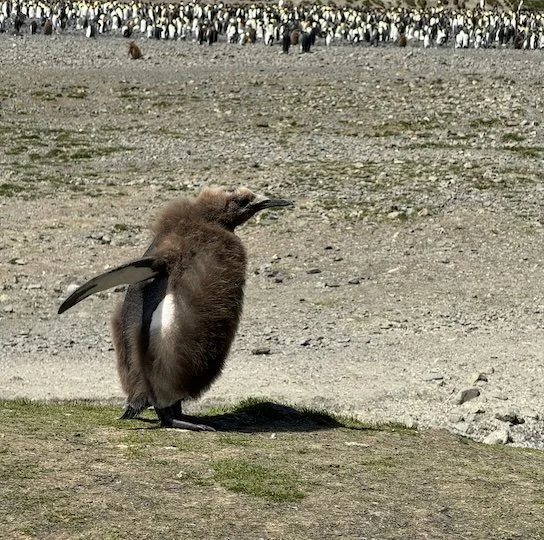
An “oakum boy” King Penguin in South georgia
A huge amount of what I learned came from Brent Houston, one of the amazing naturalists onboard, a true penguinologist who would talk about penguins with anyone who'd listen, for as long as they'd let him. He was everyone's favorite person on the ship, his presentations were always standing room only, and it was always a fantastic sign when he’d be waiting for us somewhere on an excursion. Brent = penguins.
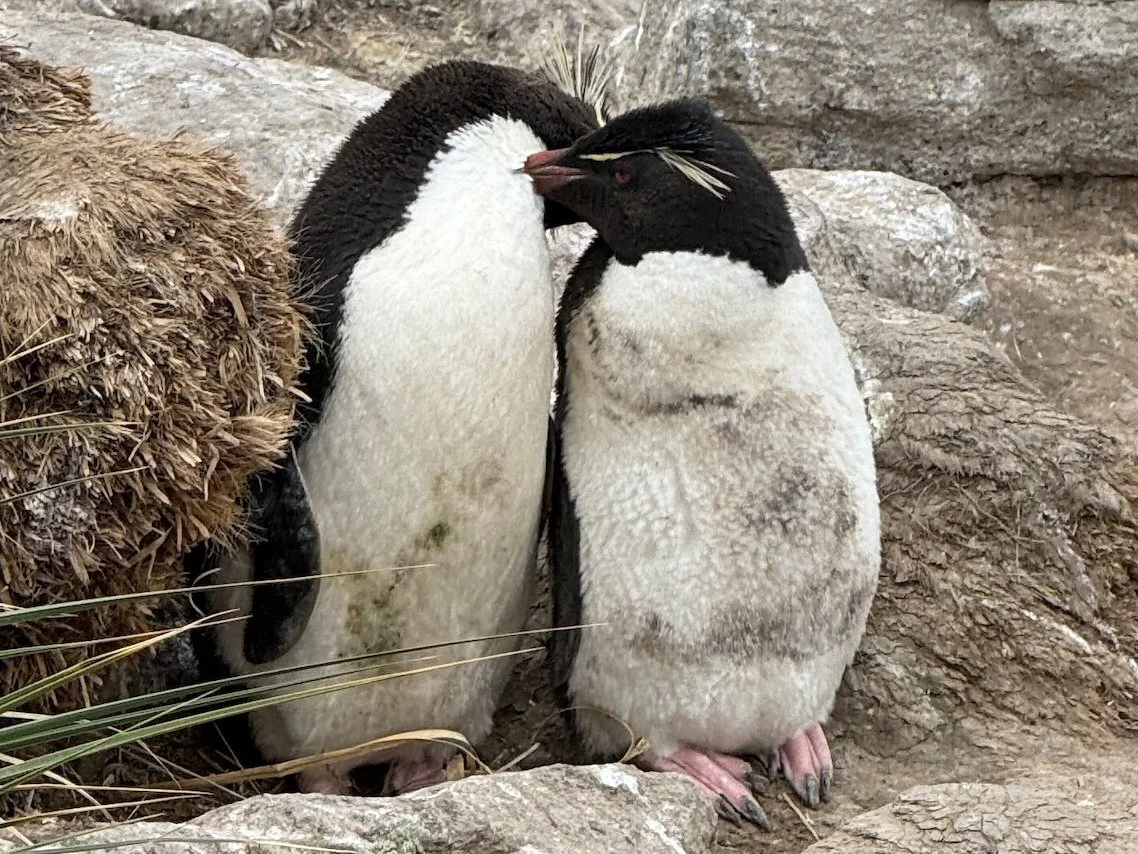
A snuggling pair of Rockhopper penguins in the Falklands
One honest thing nobody tells you - other than Brent - is that penguins are loud, and penguin colonies smell awful (hint - look at the green stuff on the penguin’s chest in the above picture). No photo can capture either of those things, and my videos don’t successfully convey the cacophony of the squawking.
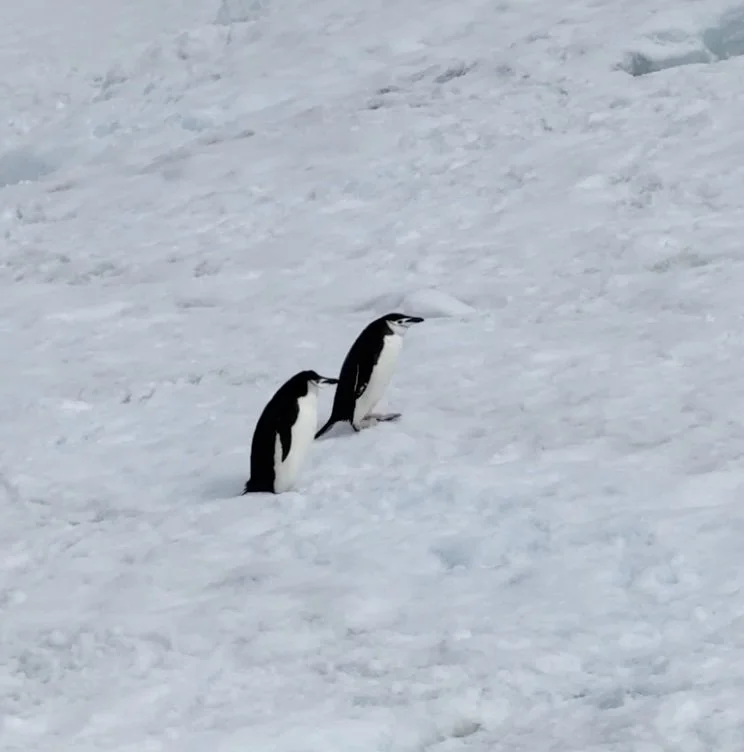
Chinstrap penguins in Antarctica
By the end of the trip, though, I'd started to look forward to that unmistakable guano smell, because it meant penguins were close by. It is so funny how quickly you get used to it, and it becomes part of the experience rather than something to get past.
