I went into this trip almost entirely for the penguins. I came home with a genuine appreciation for everything else that flies, glides, and occasionally tries to steal an egg down there too.
The ones that follow the penguins around
Two birds show up at nearly every penguin colony in this part of the world. Skuas are large, dark, mottled brown birds with white patches on their wings, and they're relentless. They'll circle a colony for hours waiting for an unguarded egg or a chick that's wandered too far from its parents. If they get too close, all of the other birds will turn on them and squawk until they back off.
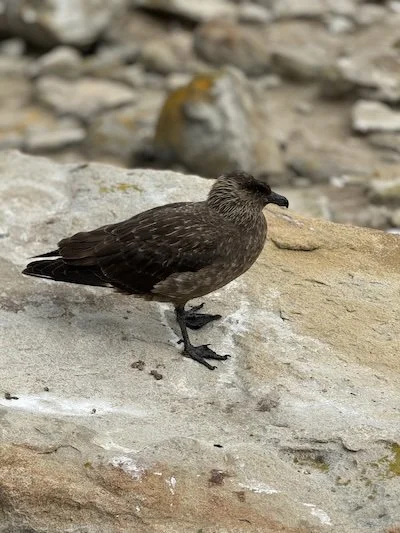
Skua
Now the snowy sheathbills - they are all white, plump, almost dove-like, and much more opportunistic. They will wait, and go after whatever they can find, wherever they can find it. Eggs, chicks, carrion, penguin droppings, anything they think they can eat. Or as you can see below - the sandal belonging to someone in the hottub.
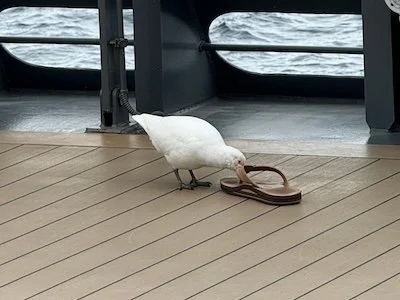
A snowy sheathbill on board Seabourn Venture in Antarctica
The albatrosses
Black-browed albatrosses were a big surprise to me,. The chickies are absolutely adorable, and they share their spaces with rockhopper penguins on islands like New Island in the Falklands, with both species of grown birds on watch against predators. They're genuinely enormous birds, and seeing their chicks nesting among the penguins was absolutely adorable. Around South Georgia, we also spotted some wandering albatross too, which hold the record for the largest wingspan of any bird alive, over eleven feet tip to tip!
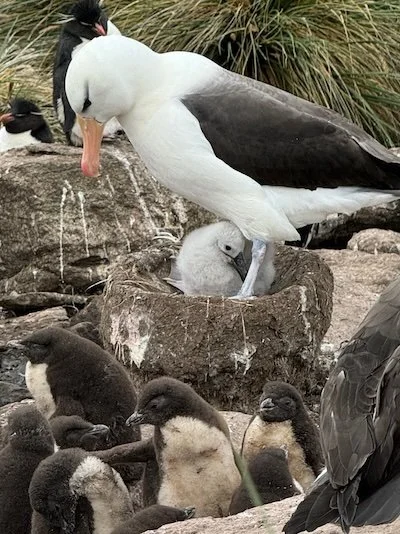
A black browed albatross takes care of its chick surrounded by rockhopper penguins
Giant petrels
These are some of the only members of the petrel family with legs strong enough to actually walk around on land, which is part of why they double as scavengers at carcasses and colonies alongside the skuas. You can tell the two species apart by the tip of their bill, pale green for southern giant petrels, reddish for northern ones, if you ever get close enough to check.
Shags, terns, and gulls
Blue-eyed shags, sometimes called imperial shags depending on exactly where you are, keep their nests occupied year-round as long as the ice allows it, which made them a reassuring landmark for old-time sailors looking for signs of land. Kelp gulls are the most common gull you'll see, black and white and scavenging, and Antarctic terns look almost identical to the Arctic terns you might know from farther north, just a little stockier with gray instead of black wingtips.
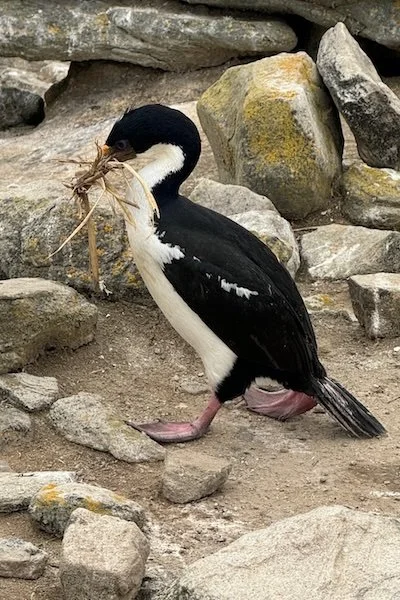
Imperial Shag
The Falklands specialists
A few birds only really show up once you reach the Falklands. Striated caracaras, also called Johnny rooks, are strange, curious little raptors that will walk right up to you without any fear at all, which makes sense given how rare and protected they are. Falkland steamer ducks are flightless and famously loud, Darwin himself wrote about the racket they make paddling around. And if you make it to South Georgia, keep an ear out for the South Georgia pipit, the only songbird that actually breeds this far south, and the one sound down here that doesn't come from something with a beak built for stealing fish or eggs.
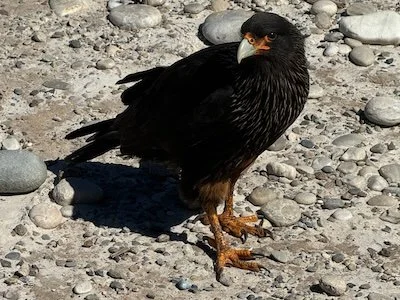
A striated caracara in the Falklands
Go for the penguins, be fascinated by the birds. All part of the incredible ecosystem that exists at the bottom of the world.